
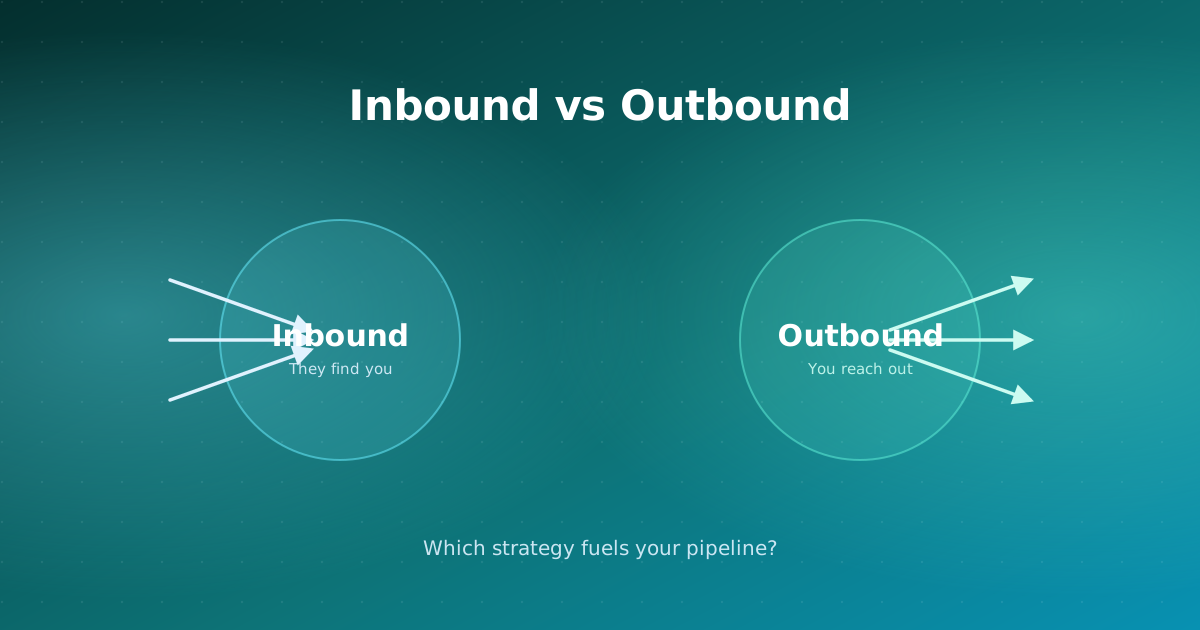
Generating high-quality leads is one of the biggest challenges for B2B businesses. Companies often choose between inbound and outbound lead generation, but the most successful organizations understand that both strategies have unique advantages.
Inbound lead generation attracts prospects who are actively searching for solutions, while outbound lead generation proactively reaches potential customers before they start looking. Knowing when and how to use each approach can significantly improve your marketing performance and sales pipeline.
This guide explains the differences, benefits, and best practices for inbound and outbound B2B lead generation.
What Is Inbound B2B Lead Generation?
Inbound lead generation focuses on attracting potential customers by providing valuable content and experiences. Instead of reaching out directly, businesses create resources that encourage prospects to find them naturally.
Common Inbound Lead Generation Channels
- Search Engine Optimization (SEO)
- Blog Articles
- Content Marketing
- Case Studies
- Whitepapers
- eBooks
- Webinars
- Social Media
- Email Newsletters
- Organic Search
Inbound marketing builds trust before a sales conversation begins.
Benefits of Inbound Lead Generation
Inbound marketing offers several long-term advantages:
- Higher quality leads
- Increased brand credibility
- Lower long-term acquisition costs
- Better search engine visibility
- Sustainable organic traffic
- Stronger customer relationships
- Improved lead nurturing opportunities
Although inbound strategies take time to produce results, they often generate consistent and scalable growth.
Challenges of Inbound Marketing
Businesses may experience:
- Longer time to see results
- High competition for search rankings
- Continuous content creation requirements
- Ongoing SEO optimization
- Regular website updates
Consistency is essential for long-term success.
What Is Outbound B2B Lead Generation?
Outbound lead generation involves proactively contacting potential customers instead of waiting for them to discover your business.
The objective is to introduce your products or services directly to targeted decision-makers.
Common Outbound Lead Generation Channels
- Cold Email Campaigns
- Cold Calling
- LinkedIn Outreach
- Direct Messaging
- Appointment Setting
- Google Ads
- LinkedIn Ads
- Trade Shows
- Business Events
Outbound marketing helps businesses reach prospects quickly.
Benefits of Outbound Lead Generation
Outbound strategies provide:
- Faster lead generation
- Immediate campaign results
- Better audience control
- Direct communication with decision-makers
- Scalable outreach campaigns
- Faster sales opportunities
When supported by verified business data, outbound marketing can deliver excellent results.
Challenges of Outbound Marketing
Common challenges include:
- Low response rates
- Outdated contact information
- Email deliverability issues
- Higher advertising costs
- Prospect fatigue
- Need for continuous personalization
Using accurate business data and relevant messaging helps overcome these challenges.
Inbound vs Outbound: Key Differences
| Inbound Lead Generation | Outbound Lead Generation |
|---|---|
| Customers find your business | You reach out to prospects |
| Focuses on education | Focuses on direct engagement |
| Long-term strategy | Short-term results |
| Lower ongoing acquisition costs | Higher campaign investment |
| Builds trust over time | Generates immediate opportunities |
| Relies on content and SEO | Relies on outreach and advertising |
Which Strategy Is Better?
There is no single answer. The right approach depends on your business goals.
Choose Inbound If You Want To:
- Increase organic traffic
- Build brand authority
- Improve search rankings
- Generate long-term leads
- Educate your audience
Choose Outbound If You Want To:
- Generate leads quickly
- Reach specific industries
- Target decision-makers
- Promote a new service
- Build your sales pipeline faster
Most successful B2B companies combine both methods.
The Best Approach: Combine Inbound and Outbound
A balanced strategy allows businesses to generate both immediate and long-term opportunities.
Example Workflow
Step 1
Publish SEO-optimized blogs.
Step 2
Attract visitors through Google Search.
Step 3
Offer downloadable resources or free consultations.
Step 4
Capture lead information.
Step 5
Use outbound email campaigns and LinkedIn outreach to engage qualified prospects.
Step 6
Schedule appointments and nurture leads.
This integrated strategy improves lead quality while maintaining a consistent sales pipeline.
Best Practices for Successful Lead Generation
- Maintain a verified B2B database.
- Define your Ideal Customer Profile (ICP).
- Personalize every email and message.
- Publish valuable content consistently.
- Optimize your website for SEO.
- Track campaign performance.
- Test different outreach methods.
- Align marketing and sales teams.
How Data Marketics Helps Businesses Generate Better Leads
Data Marketics combines inbound and outbound marketing strategies to help businesses connect with the right decision-makers.
Our services include:
- B2B Lead Generation
- Demand Generation
- Intent Data
- Verified B2B Email Databases
- Data Enrichment
- Appointment Setting
- Content Syndication
By combining accurate business data with strategic marketing, we help organizations generate qualified leads and accelerate business growth.
Conclusion
Inbound and outbound lead generation are not competing strategies—they complement each other. Inbound marketing builds trust, authority, and long-term visibility, while outbound marketing creates immediate opportunities by proactively engaging target audiences.
Businesses that combine SEO, valuable content, verified business data, personalized outreach, and continuous optimization are better positioned to generate qualified leads and grow their sales pipeline.
How Data Marketics can help


Join the conversation
Leave a comment
Have a question about this article, or something to add? Your comment goes directly to the Data Marketics team by email — it is not published on the page — and we reply to the address you leave.