
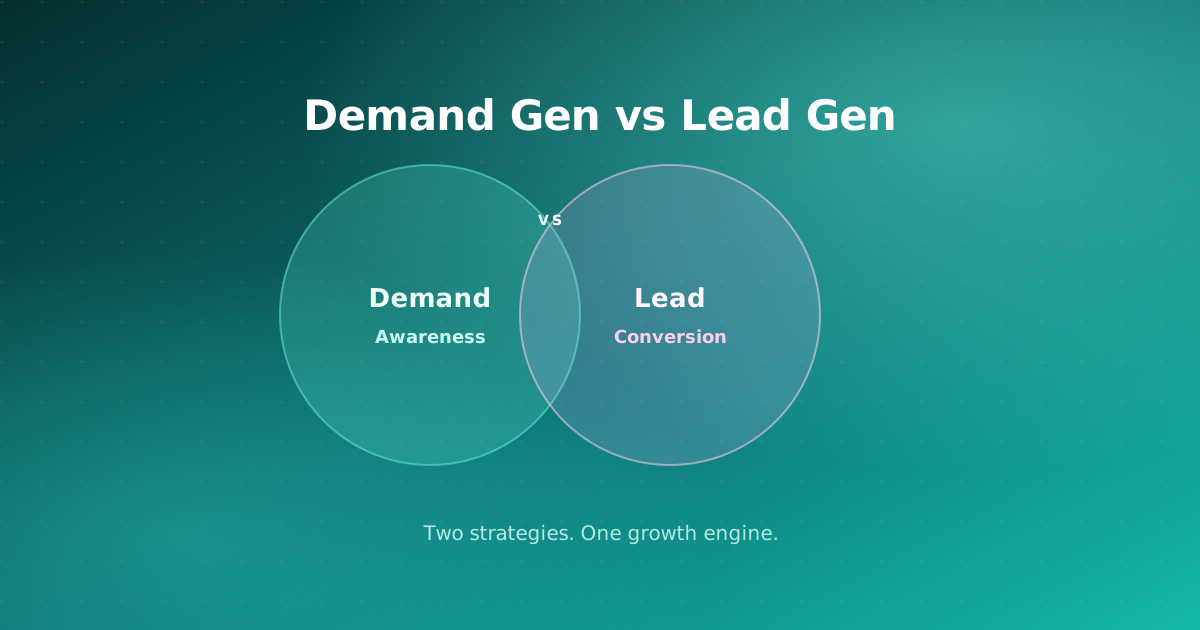
Many businesses use the terms lead generation and demand generation interchangeably, but they serve different purposes within a B2B marketing strategy. While both aim to drive business growth, they focus on different stages of the buyer's journey.
Demand generation creates awareness and interest in your brand, while lead generation captures and converts that interest into qualified business opportunities.
Understanding how these strategies work together can help organizations build a stronger sales pipeline and improve marketing ROI.
What Is Demand Generation?
Demand generation is the process of creating awareness and educating potential customers about your products or services before they are ready to make a purchasing decision.
Instead of asking prospects to buy immediately, demand generation focuses on building trust and positioning your business as a valuable resource.
Common Demand Generation Activities
- Educational blog content
- Industry reports
- Webinars
- Whitepapers
- Social media marketing
- Video marketing
- Email newsletters
- SEO
- Brand awareness campaigns
The primary objective is to attract the right audience and generate interest over time.
What Is Lead Generation?
Lead generation focuses on converting interested prospects into identifiable business leads by collecting their contact information.
Once potential customers engage with your business, lead generation strategies encourage them to take the next step.
Common Lead Generation Activities
- Contact forms
- Landing pages
- Demo requests
- Free consultation offers
- Sample database requests
- Email sign-ups
- Appointment booking
- Live chat
The goal is to move prospects into your sales pipeline.
Key Differences Between Demand Generation and Lead Generation
| Demand Generation | Lead Generation |
|---|---|
| Creates awareness | Captures qualified leads |
| Focuses on education | Focuses on conversions |
| Targets early-stage buyers | Targets buyers ready to engage |
| Builds long-term relationships | Generates immediate opportunities |
| Measures reach and engagement | Measures leads and conversions |
Although different, these strategies complement each other.
How They Work Together
A successful B2B marketing strategy combines both demand generation and lead generation.
Step 1: Create Awareness
Publish blogs, guides, videos, webinars, and educational resources that solve customer problems.
Step 2: Build Trust
Provide valuable insights that demonstrate your expertise.
Step 3: Capture Leads
Offer downloadable resources, consultation requests, or demo forms to collect contact information.
Step 4: Nurture Prospects
Use email campaigns, remarketing, and personalized communication to keep prospects engaged.
Step 5: Convert Into Customers
Sales teams qualify leads, schedule meetings, and guide prospects through the purchasing process.
Benefits of Demand Generation
Demand generation helps businesses:
- Increase brand visibility
- Build credibility
- Educate potential customers
- Generate organic website traffic
- Improve customer trust
- Support long-term business growth
Benefits of Lead Generation
Lead generation enables businesses to:
- Capture qualified prospects
- Build predictable sales pipelines
- Increase conversion rates
- Improve sales productivity
- Accelerate revenue growth
- Measure campaign effectiveness
Which Strategy Should You Focus On?
The answer is both.
Businesses that invest only in lead generation may struggle to build awareness, while those focusing only on demand generation may generate interest without converting prospects.
The most effective strategy combines:
- Educational content
- SEO
- Email marketing
- Intent data
- LinkedIn outreach
- Appointment setting
- Marketing automation
This integrated approach supports buyers throughout their decision-making journey.
Best Practices for Success
- Understand your Ideal Customer Profile (ICP).
- Publish high-quality educational content regularly.
- Optimize your website for search engines.
- Use verified B2B data for outreach.
- Personalize email and LinkedIn campaigns.
- Monitor campaign performance.
- Align sales and marketing teams.
- Continuously optimize your strategy.
How Data Marketics Supports Business Growth
Data Marketics helps organizations strengthen both demand generation and lead generation through reliable B2B data solutions.
Our services include:
- B2B Lead Generation
- Demand Generation
- Intent Data
- Data Enrichment
- Appointment Setting
- Content Syndication
- Verified Business Databases
By combining accurate business data with targeted marketing strategies, we help businesses generate awareness, engage decision-makers, and convert qualified prospects into customers.
Conclusion
Demand generation and lead generation are not competing strategies—they are complementary. Demand generation creates awareness and builds trust, while lead generation transforms that interest into qualified business opportunities.
Organizations that combine both approaches are better positioned to attract high-quality prospects, improve conversion rates, and build a sustainable sales pipeline.
Whether you're launching a new marketing campaign or optimizing your existing strategy, integrating demand generation with lead generation can deliver measurable, long-term business growth.
How Data Marketics can help


Join the conversation
Leave a comment
Have a question about this article, or something to add? Your comment goes directly to the Data Marketics team by email — it is not published on the page — and we reply to the address you leave.